Blog
Dental hygiene tips for healthy teeth & gums
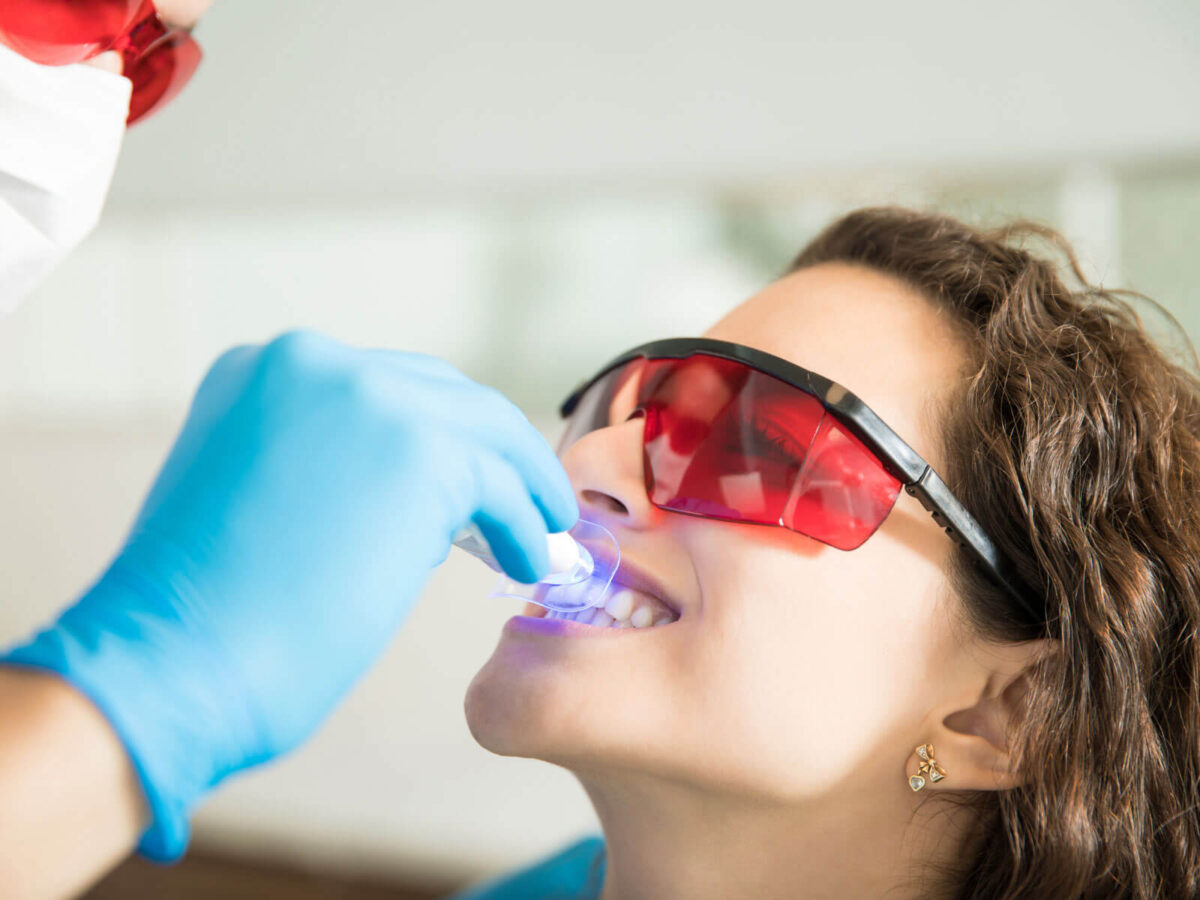
Teeth Whitening Cost: What Affects the Price?
Most people assume whitening is straightforward. A gel, a light, and brighter teeth. That’s the mental picture.
Then they start searching for teeth whitening cost, and the numbers don’t line up. One option costs under fifty dollars. Another is several hundred. Some clinics charge even more. That gap creates doubt. Is professional whitening really that different? Or is it just branding?
The answer isn’t dramatic. It’s layered. Whitening works, but how it works and how safely it works changes what you’re paying for.
Why Store Kits and Professional Treatments Feel Worlds Apart
Retail whitening kits are convenient to purchase and typically come at a lower price. They contain lower concentrations of bleaching agents designed for general use without supervision. Professional treatments use stronger peroxide formulations. That’s not marketing language. It’s chemistry.
The American Dental Association explains that in-office whitening typically uses higher concentrations of hydrogen peroxide than retail products, which allows results to appear more quickly under controlled conditions. That supervision is part of what increases dental whitening cost.
You’re not only paying for gel. You’re covering assessment, safeguarding gums, and controlled application.
What Does Teeth Whitening Actually Cost?
When patients ask, “How much does teeth whitening cost?” the average in the United States typically falls between $500 and $650 for in-office treatment. That estimate comes from data published by the American Academy of Cosmetic Dentistry.
Take-home professional trays usually cost less than in-office sessions but more than drugstore kits. But averages don’t tell the whole story. Running a clinic in a major city usually comes with higher expenses. Offices that emphasize cosmetic results may also build in more time for color analysis and follow-up. The number reflects context, not just materials.
Why Concentration Changes Everything
The way whitening actually works is fairly simple. Peroxide moves through the enamel and starts breaking apart the stain particles inside. Higher strengths act quicker, while lower strengths lighten more gradually.
The Journal of Evidence-Based Dental Practice has published findings suggesting bleaching agent concentration plays a stronger role in effectiveness than light activation alone.
That matters because many advertisements emphasise light technology. Lights may help in certain systems, but chemistry drives results.
So when comparing teeth whitening dentist costs, it helps to ask about formulation rather than only the equipment.
Why Sensitivity Influences Cost Too
Sensitivity is one of the most common side effects of whitening. Research suggests that roughly 60–70% of patients notice it during treatment or soon after it’s finished. Most cases are mild and short-lived. Still, stronger agents increase the possibility.
Professional treatment allows desensitizing products to be applied immediately if needed. Gums are protected with barriers. Strength can be adjusted mid-procedure.
That safety oversight contributes to a higher teeth whitening cost compared to unsupervised kits. A lower price usually means less customization.
Why Not All Stains Respond the Same Way
Surface stains from coffee or tea often respond well to whitening. Internal discoloration from medication, trauma, or aging may require multiple sessions—or may not respond fully at all.
If restorations such as crowns or bonding are visible in the smile, those materials will not whiten. They may need replacement afterwards to match the new shade. That possibility increases the total expense beyond the initial dental whitening cost. It’s not that whitening failed. It’s that uniform color that requires more than bleaching alone.
Why Longevity Should Be Part of the Cost Discussion
Price comparisons happen quickly, but longevity doesn’t always get the same attention. In many cases, professional whitening can keep its effect for one to three years, influenced largely by diet and maintenance routines. Store kits may require more frequent repetition.
If lower-cost treatments must be repeated multiple times per year, long-term expenses begin approaching professional pricing. Value depends on durability as much as starting cost.
Why Geography Quietly Changes Pricing
Prices can differ quite a bit. A practice in a major metro area may cost noticeably more than one in a small town. That difference rarely reflects quality alone. Rent, staffing, and operational expenses influence procedure fees across all dental services.
This pattern isn’t unique to whitening. The American Dental Association regularly reports regional variation in procedure fees based on practice overhead and location.
So when evaluating “how much does teeth whitening cost”, location often plays a role independent of technique.
Why DIY Trends Can Become More Expensive
It’s common to come across posts promoting charcoal powders or acidic rinses as fast whitening solutions.
The National Library of Medicine includes research showing that frequent use of abrasive whitening products may slowly damage enamel. It’s not immediate, but it can add up.
Once enamel is lost, the body doesn’t replace it. If enamel becomes damaged through aggressive methods, corrective treatment may cost far more than professional whitening ever would. The lowest advertised price is not always the lowest total investment.
Why Confidence Often Drives the Decision
Cost discussions often focus strictly on dollars. The American Academy of Cosmetic Dentistry has asked adults about this directly. More than 80% said an attractive smile improves how confident they feel. That’s a strong majority.
Whitening is typically elective, yet patients often describe the change as meaningful. While confidence isn’t measurable in currency, it influences how people evaluate the cost of teeth whitening. For some, the emotional return outweighs the financial one.
When Whitening Isn’t the Right Option
There are moments when whitening just isn’t going to give the result someone hopes for. Teeth with very thin enamel can react poorly, and deeper staining doesn’t always lighten much. Add in multiple restorations, and things can look patchy rather than brighter. That’s often when alternatives like veneers or bonding enter the discussion.
According to the American College of Prosthodontists, aesthetic planning isn’t only about looks. Long-term durability needs to be part of the discussion, too.
If whitening cannot achieve predictable results, alternative treatments will change the overall financial picture. That’s why consultation matters before committing to any number seen online.
FAQs
What kind of price do people usually see for teeth whitening?
It costs around $600 in a dental clinic setting. But it’s not identical everywhere, since region and technique both influence the total.
What makes teeth whitening a bit more costly?
The treatment is supervised and uses higher-strength products. Extra precautions are taken to protect soft tissues.
Does insurance step in?
Not typically. Most insurance plans don’t treat whitening as something essential.
How long does the brighter look usually stick around?
Somewhere between one and three years for most people. But daily habits can speed up fading.
Conclusion
The topic of teeth whitening cost tends to sound straightforward until you start comparing options. Then the differences show up. Concentration levels vary. Supervision varies. Customization varies. Even how long the results last can shift from one approach to another. All of that influences price more than most people realize.
So when someone types in how much does teeth whitening cost, the better question might be what’s included in that number. A lower dental whitening cost may not factor in professional monitoring. When you see a higher teeth whitening dentist cost, it often comes down to training and how controlled the treatment is. The focus is generally on predictable outcomes and protecting your teeth, rather than promotional promises.
If whitening keeps coming up in your mind, it might just be easier to ask about it directly instead of trying to piece together numbers online. Bring up the teeth whitening cost during your next visit and see how it applies to your teeth, not someone else’s. Once you understand what’s included and what isn’t, the decision tends to feel a lot less confusing.